




Man Made Diamonds Explained
From a science bench, rose gold diamond rings appear just like natural ones but start life indoors. Their makeup matches earth-mined stones, atom by atom. What sets them apart boils down to location, nothing else. Deep ground pressure gets swapped for precise indoor setups. Time stretches of eons shrink into weeks under human control. One way to make diamonds uses intense heat and pressure, just like deep underground. This method copies how nature builds them over time. Another path involves turning gas into solid diamond bit by bit. Here, vapor slowly settles into crystal layers. Each process results in gems matching real ones in sparkle and strength.
Man Made Diamonds Why Choose
Picking a lab created diamond makes sense for plenty of down to earth reasons. One stands out right away – cost. These stones often run between twenty and forty percent cheaper than their mined counterparts. That difference means more room to choose either a bigger size or better traits without stretching your wallet. Each piece comes with dependable uniformity too. Predictable results often come from tight control during creation. A lab grown stone might suit someone after a perfect rose gold band. When details matter, consistency tends to show up where processes stay steady.
Appearance and Quality
A human-made diamond looks just like one pulled from the ground. Its shine matches perfectly, reflecting light with the same fire. When set into a rose gold band, nobody can tell if it began underground or in a lab. What matters most comes on paper. Trust only stones checked by known groups – GIA, say, or IGI. These reports confirm what you actually have: weight, clarity, how it was shaped. Surprise hides in details, but proof lies in print.
Buying Practical Advice
When buying a man made diamond, consider the following:
- Look at how much each point costs when you stack lab stones against natural ones. See what drops off the total.
- Start by looking at the grading report’s details on how well it was cut. Its clearness matters just as much, so take note of that section too. Moving along, check what shade it leans toward – color plays a role. The size, measured in carats, sits right there in the data.
- A trusted jeweler focusing on lab created stones makes a solid starting point. Their expertise ensures you see accurate quality without confusion. Not every store offers this level of specific knowledge. A specialist gives clarity where others might blur details. Focus shifts naturally when the right hands handle the process.
- A place needs choosing first. Warmth in lots of diamonds grows stronger with rose gold nearby.
Picture this: choosing a 1-carat diamond in rose gold might lead you straight to a D-color gem, especially when it’s lab created – spending stays low. A.
Durability and Longevity
Lab grown diamonds hold up just like natural ones when it comes to toughness. A rating of 10 on the Mohs scale shows their strength. Daily wear won’t leave marks or damage over time. For cleaning, try warm water mixed with gentle soap. Grab a soft toothbrush to gently brighten the surface. Check the metal around the gem now and then to make sure everything holds tight.
Environmental and Ethical Factors
Man made stones enter the picture when nature feels too heavy on the planet. Because they skip digging, less soil gets torn up, fewer fumes fill the air. Workers aren’t pushed into risky spots just to dig deep underground. Where a gem comes from? Never an issue here. Here’s something worth noting – no mining was involved. Should eco-conscious choices matter to you, then a rose gold band set with a man-made stone might fit just right into what feels important.
Examples of Use
Man made diamonds fit into many ring styles. Common choices include these:
- Solitaire engagement rings
- Halo designs that feature smaller accent stones
- Stackable rings and bands
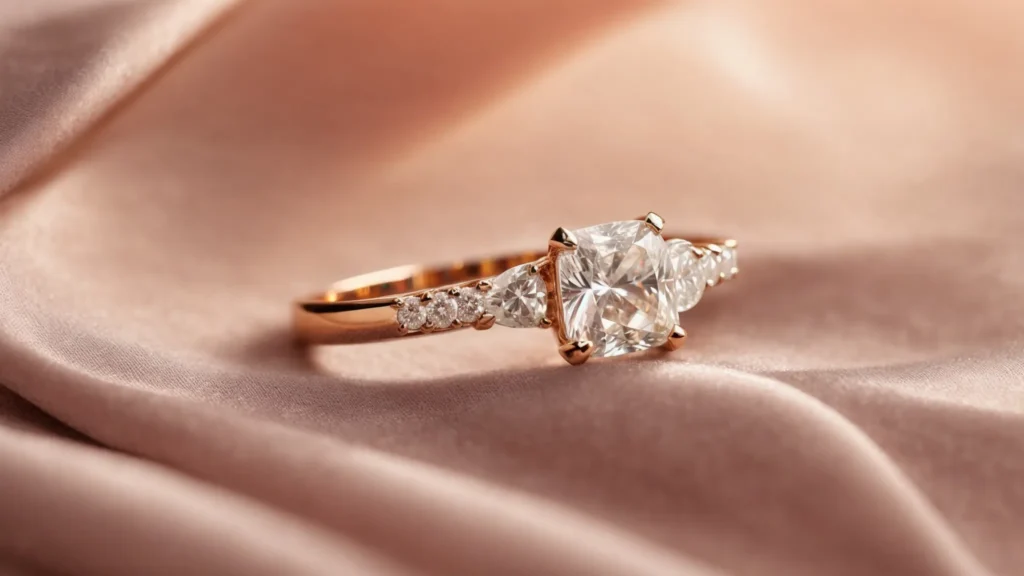
A single pink-gold band might hold a center stone made in a lab, tiny cultured gems hugging it close – bold appearance, without the steep cost.
FAQ
Are man made diamonds real?
Fine. Their makeup matches natural stones – same structure, behavior, light response. Exactly alike in every measurable way.
Do man made diamonds lose value?
Though lab-grown stones often sell for less later, their upfront price drops much further, so spending shrinks at purchase. What stays high is the difference you feel when comparing first cost to return.
Can man made diamonds be set in rose gold rings?
Yes. With rose gold or even silver, they look just like real diamonds – no difference at sight. Their shine blends right in.